


Dracula and Whitby
Few places in Britain are tied to a fictional character as strongly as Whitby is tied to Dracula. Long before Goth Weekend and vampire tours, Bram Stoker found in Whitby exactly what a Gothic novelist needs: dramatic cliffs, stormy seas, old gravestones, ruined stonework and a deep sense of layered history.
If you have not read it yet, visit our Bram Stoker page first for background on the author.
Whitby in Bram Stoker's notebook
Bram Stoker stayed in Whitby in the summer of 1890, lodging near the West Cliff. During that visit he spent time in the public library and took notes from books on local history and folklore. Researchers of Stoker's surviving notes have shown that Whitby was not a passing mention: it became one of the key settings that gave the novel its atmosphere, pacing and some of its most unforgettable scenes.
Stoker was drawn to the contrast Whitby offers even now - busy harbour life below, ancient abbey ruins above, and the long climb of steps between the two. That vertical landscape works perfectly in Gothic fiction, where place is never just background; it becomes a character in its own right.
The Demeter and Whitby's harbour drama
One of Dracula's most famous episodes is the arrival of the Russian schooner Demeter at Whitby after a terrifying voyage from the Black Sea. In Stoker's telling, the ship enters harbour in a storm with no living crew aboard. A large dog leaps from the vessel and races up the steps toward the churchyard.
That sequence fused maritime fear with a location readers could picture vividly. Whitby's pier heads, river mouth and exposed coastline made the scene believable in a way an invented port would not. Local shipping stories and nineteenth-century newspaper reports of wrecks and difficult landings likely gave Stoker additional detail and confidence in writing the episode.
St Mary's churchyard, the 199 steps and the Abbey
The climb from the old town to St Mary's Church and the Abbey ruins sits at the centre of Whitby's Dracula geography. In the novel, Lucy and Mina walk and talk on the East Cliff while strange events gather around them. The setting combines open sea views with enclosed graveyard paths, creating that classic Gothic balance between beauty and unease.
Visitors often ask whether every place in the novel maps exactly to today's streets. Not always. Stoker adapted and reshaped details for narrative effect. But the emotional truth of the setting is unmistakably Whitby: sea mist, cliff edges, old stones, church bells and sudden weather changes all feed the same mood readers encounter on the page.
How much is history, how much is myth?
Over time, stories about Stoker's exact movements in Whitby have grown, and some are stronger than others as documented history. What is clear is this: he was here, he researched here, and he used Whitby directly in the finished novel published in 1897.
It is also clear that Whitby helped turn Dracula from a straightforward horror story into something richer - part travel writing, part folklore, part psychological thriller. The town's real geography gave structure to the early middle chapters and helped the supernatural events feel grounded.
Why Dracula still matters to Whitby
More than a century later, Dracula remains one of Whitby's best-known cultural associations worldwide. Readers come to stand where the fictional ship arrived. Film crews and photographers return for the same skyline. The Gothic festivals built in part on this literary connection have become a defining feature of the town's modern identity.
This has created an unusual cultural loop:
- Stoker used Whitby to strengthen a novel.
- The novel changed how millions of readers imagine Whitby.
- Whitby then embraced that legacy and turned it into a living part of local tourism and culture.
For a coastal town with deep connections to seafaring, faith, folklore and storytelling, that loop feels entirely fitting.
Dracula in Whitby today: what to look for
If you are exploring the town with the novel in mind, focus on four connected locations:
- Tate Hill and the harbour entrance, tied to the Demeter arrival scene.
- The 199 steps linking harbour level to the East Cliff.
- St Mary's churchyard, where mood and setting in the novel become especially vivid.
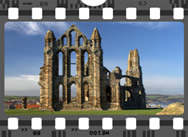
- Whitby Abbey, whose silhouette remains one of the most recognisable Gothic backdrops in Britain.
Together these places explain why Whitby was so important to Stoker. They are not museum pieces. They are still active, windswept, lived-in parts of the town - and that is exactly what keeps the Dracula connection fresh.
Read next
Continue with Bram Stoker (1847-1912) for more on the writer behind the novel.
Whitby in Bram Stoker's notebook
Bram Stoker stayed in Whitby in the summer of 1890, lodging near the West Cliff. During that visit he spent time in the public library and took notes from books on local history and folklore. Researchers of Stoker's surviving notes have shown that Whitby was not a passing mention: it became one of the key settings that gave the novel its atmosphere, pacing and some of its most unforgettable scenes.
Stoker was drawn to the contrast Whitby offers even now - busy harbour life below, ancient abbey ruins above, and the long climb of steps between the two. That vertical landscape works perfectly in Gothic fiction, where place is never just background; it becomes a character in its own right.
The Demeter and Whitby's harbour drama
One of Dracula's most famous episodes is the arrival of the Russian schooner Demeter at Whitby after a terrifying voyage from the Black Sea. In Stoker's telling, the ship enters harbour in a storm with no living crew aboard. A large dog leaps from the vessel and races up the steps toward the churchyard.
That sequence fused maritime fear with a location readers could picture vividly. Whitby's pier heads, river mouth and exposed coastline made the scene believable in a way an invented port would not. Local shipping stories and nineteenth-century newspaper reports of wrecks and difficult landings likely gave Stoker additional detail and confidence in writing the episode.
St Mary's churchyard, the 199 steps and the Abbey
The climb from the old town to St Mary's Church and the Abbey ruins sits at the centre of Whitby's Dracula geography. In the novel, Lucy and Mina walk and talk on the East Cliff while strange events gather around them. The setting combines open sea views with enclosed graveyard paths, creating that classic Gothic balance between beauty and unease.
Visitors often ask whether every place in the novel maps exactly to today's streets. Not always. Stoker adapted and reshaped details for narrative effect. But the emotional truth of the setting is unmistakably Whitby: sea mist, cliff edges, old stones, church bells and sudden weather changes all feed the same mood readers encounter on the page.
How much is history, how much is myth?
Over time, stories about Stoker's exact movements in Whitby have grown, and some are stronger than others as documented history. What is clear is this: he was here, he researched here, and he used Whitby directly in the finished novel published in 1897.
It is also clear that Whitby helped turn Dracula from a straightforward horror story into something richer - part travel writing, part folklore, part psychological thriller. The town's real geography gave structure to the early middle chapters and helped the supernatural events feel grounded.
Why Dracula still matters to Whitby
More than a century later, Dracula remains one of Whitby's best-known cultural associations worldwide. Readers come to stand where the fictional ship arrived. Film crews and photographers return for the same skyline. The Gothic festivals built in part on this literary connection have become a defining feature of the town's modern identity.
This has created an unusual cultural loop:
- Stoker used Whitby to strengthen a novel.
- The novel changed how millions of readers imagine Whitby.
- Whitby then embraced that legacy and turned it into a living part of local tourism and culture.
For a coastal town with deep connections to seafaring, faith, folklore and storytelling, that loop feels entirely fitting.
Dracula in Whitby today: what to look for
If you are exploring the town with the novel in mind, focus on four connected locations:
- Tate Hill and the harbour entrance, tied to the Demeter arrival scene.
- The 199 steps linking harbour level to the East Cliff.
- St Mary's churchyard, where mood and setting in the novel become especially vivid.
- Whitby Abbey, whose silhouette remains one of the most recognisable Gothic backdrops in Britain.
Together these places explain why Whitby was so important to Stoker. They are not museum pieces. They are still active, windswept, lived-in parts of the town - and that is exactly what keeps the Dracula connection fresh.
Read next
Continue with Bram Stoker (1847-1912) for more on the writer behind the novel.
| << Prev | Next >> |
SEARCH WHITBY ONLINE
(WITH GOOGLE CSE)
(WITH GOOGLE CSE)
Advertisement...

Whitby Gallery Photo
Whitby Movies
Whitby in 1959
Advertisement...

Advertisement...
Your Fortune...
Translator...
Useful Whitby Links
To Make You Smile
Drilling for oil is boring.